India’s gig economy is buzzing again after Zomato CEO Deepinder Goyal’s public call for better treatment of delivery partners. His statement reignited the ongoing debate on gig worker benefits, fair pay, and the urgent need for better social protection in a rapidly growing digital labor market.
The Growing Discontent Among Gig Workers
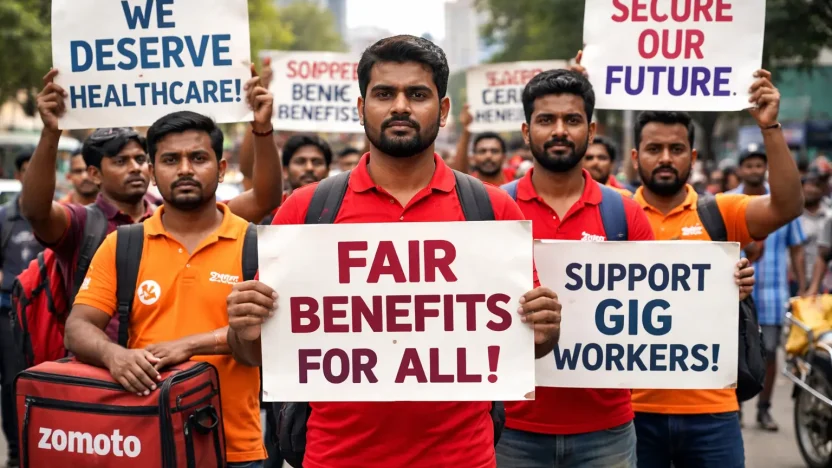
Thousands of gig workers across food delivery, ride-hailing, and logistics platforms have voiced frustration over low pay and lack of job security. Many claim that rising fuel costs and increased delivery targets have made earnings unstable. This recent wave of strikes, including protests involving Zomato and Swiggy riders, highlights deep concerns about long-term sustainability for those working without formal contracts.
Zomato CEO’s Surprising Statement
In a rare move, Zomato CEO Deepinder Goyal acknowledged that gig workers deserve benefits similar to full-time employees. He proposed the idea of introducing social security, health insurance, and accident coverage to support delivery partners. While his remarks were praised by many, others questioned whether the company could realistically afford such measures without increasing costs for customers or reducing margins for restaurants.
Government Push for Regulation
The Indian government has already taken steps to address gig worker benefits through proposed amendments to the labor code. However, enforcement and clarity remain key challenges. Experts believe that collaboration between companies like Zomato, policymakers, and labor unions could create a balanced framework ensuring fair treatment without stifling innovation.
Industry and Worker Reactions
Gig workers welcomed Goyal’s comments but stressed that words must be followed by action. “We deliver rain or shine, yet have no health cover,” said a delivery partner in Bengaluru. Industry analysts also noted that sustainable gig work requires systemic change, not just goodwill statements. Competing platforms like Swiggy and Ola are under pressure to improve their own policies too.
The Future of Gig Worker Benefits in India
The recent strike could mark a turning point for India’s gig economy. With increasing media coverage and public empathy, companies may be forced to rethink their strategies. Real progress, however, depends on a shared commitment between business leaders, policymakers, and the workers themselves.
As the debate over gig worker benefits continues, India’s digital labor landscape may soon enter a new era of fairness and accountability — one that finally recognizes the people behind the apps.