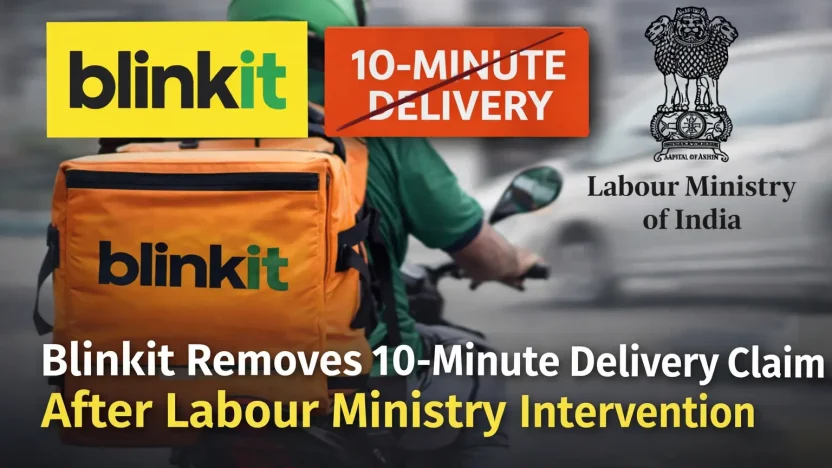
The food and grocery delivery landscape in India has seen a major shift as Blinkit officially dropped its “10-minute delivery” promise. The move came after the Labour Ministry’s intervention over growing safety concerns for delivery partners. This decision, seen as a win for gig workers, could redefine the balance between speed, safety, and sustainability in India’s rapid commerce sector.
Why Blinkit’s 10-Minute Delivery Policy Sparked Controversy
When Blinkit launched its 10-minute delivery feature, it quickly became a market differentiator and a viral marketing point. But behind the promise of ultra-fast convenience were mounting reports of delivery workers facing pressure, traffic risks, and unfair expectations. The backlash grew as social media and labour activists questioned whether such timelines were humanly achievable without compromising safety.
Labour Ministry’s Intervention and Industry Impact
The Ministry of Labour and Employment reportedly engaged with Blinkit’s leadership after multiple worker groups raised concerns. Following the discussions, Blinkit decided to remove all 10-minute delivery mentions from its platforms and marketing materials. The Ministry’s action also set a precedent for other quick commerce players like Swiggy Instamart and Zepto, which have been competing in the same space.
A Turning Point for India’s Gig Economy
This policy change signals a significant moment for India’s gig workers. With around 7.7 million people employed in the gig sector, according to NITI Aayog, the decision represents an acknowledgment of worker welfare. It also pressures other companies to reconsider policies that prioritize customer satisfaction over worker safety. The shift could encourage more transparent working conditions and performance standards.
Consumer Reaction and Business Outlook
While some consumers enjoyed the ultra-fast service, many have expressed relief online, agreeing that worker safety should come first. Industry experts believe the move won’t drastically affect Blinkit’s growth, as the company has already built strong brand recognition. However, analysts expect Blinkit and its competitors to focus on optimizing last-mile delivery without unrealistic timelines.
What This Means for the Future of Quick Commerce
The end of the 10-minute delivery race could open the door for innovation in logistics rather than speed marketing. Companies might invest more in automation, route optimization, and better incentive systems for delivery partners. For gig workers, this shift promises a safer, more stable future — one that values well-being over impossible deadlines.
For more insights on the evolving gig economy, worker rights, and startup ecosystems, visit GeeksGrow.