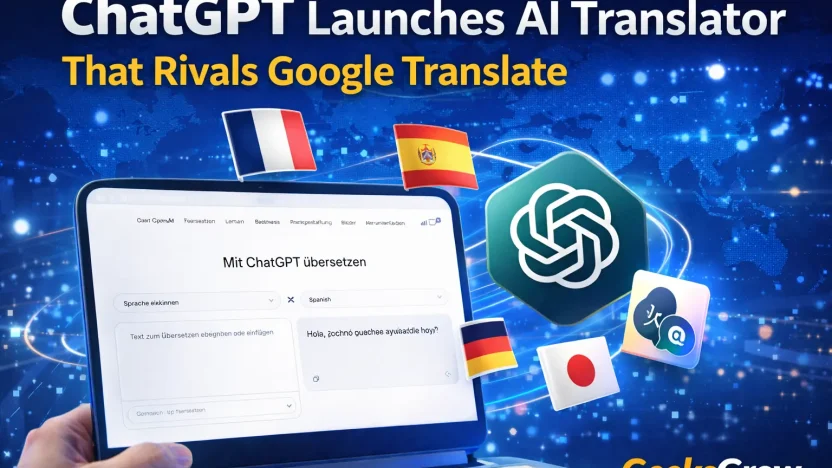
OpenAI has introduced a powerful new feature inside ChatGPT—a built-in translator that’s already drawing comparisons to Google Translate and DeepL. Early users say the ChatGPT AI translator delivers more natural and context-aware translations, pushing the boundaries of what language models can do. Learn more in Non-consensual AI images.
What Is the ChatGPT AI Translator?
The new translation feature in ChatGPT allows users to instantly translate text between multiple languages directly in the chat interface. It supports automatic language detection and offers flexible tone options like casual, professional, or academic, making it ideal for both personal and business use.
How the ChatGPT Translator Works
Powered by GPT-4, the ChatGPT translator doesn’t just substitute words—it interprets meaning and intent. This means translations are more fluid, contextually accurate, and capable of handling idiomatic expressions that often trip up traditional translation tools.
Users can choose their target language, paste or type text, and even select a tone. The model then generates a natural-sounding translation that fits the desired style.
ChatGPT vs Google Translate vs DeepL
While Google Translate remains a go-to for quick conversions, early comparisons show that ChatGPT’s translations feel more conversational and precise. DeepL, the German-based translation startup known for its nuanced output, may finally face serious competition in the premium translation space.
ChatGPT’s advantage lies in its ability to translate contextually—considering tone, subject, and user intent. For example, business documents or social media captions can be translated differently depending on the goal, something static tools often overlook.
Use Cases for ChatGPT’s Translator
- Global Communication: Translate messages, emails, or social posts naturally across languages.
- Academic Translation: Convert research papers or essays while maintaining formal tone and accuracy.
- Creative Writing: Translate poetry, blogs, or stories while preserving emotion and nuance.
- Travel: Get real-time translations of conversations, directions, and menus.
Can DeepL Keep Its Edge?
DeepL has built a reputation for producing human-like translations, particularly in European languages. However, ChatGPT’s broader AI ecosystem and conversational flexibility could give it an edge, especially as users increasingly prefer one integrated AI assistant for everything.
Privacy and Control
Like all ChatGPT features, translations are processed securely under OpenAI’s privacy framework. No public data is shared, and users can control what’s saved or deleted from their sessions.
Final Thoughts
The ChatGPT AI translator marks another major step in OpenAI’s mission to make AI universally helpful. With smoother translations, flexible tones, and deep context understanding, ChatGPT is set to redefine how people bridge language barriers online.