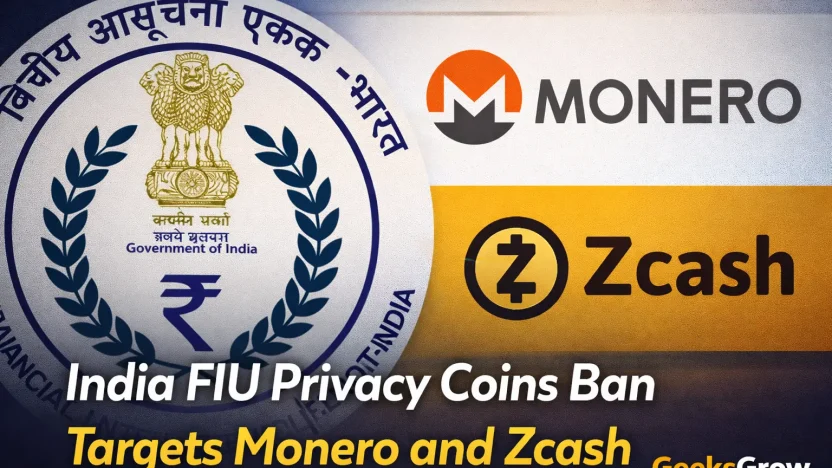
India FIU privacy coins ban has sent ripples across the crypto community. The Financial Intelligence Unit (FIU) has directed all registered crypto exchanges to cease dealing with privacy-focused cryptocurrencies such as Monero (XMR) and Zcash (ZEC). The move aims to strengthen anti-money laundering (AML) oversight and improve traceability within the Indian crypto ecosystem.
Why the FIU Moved Against Privacy Coins
The FIU’s action comes amid growing global concern that privacy coins are being misused for illicit financial activities. Unlike Bitcoin or Ethereum, these tokens offer advanced privacy features that conceal sender and receiver details as well as transaction amounts. While this ensures user anonymity, regulators argue it poses major challenges to tracking criminal or terrorist financing.
By restricting the use of Monero, Zcash, and similar coins, the FIU intends to align India’s crypto regulations with the Financial Action Task Force (FATF) standards. These standards require all virtual asset service providers (VASPs) to maintain transparent transaction records and comply with Know Your Customer (KYC) norms.
Impact on Indian Crypto Exchanges
Crypto platforms operating under the FIU’s jurisdiction must now delist or disable trading pairs involving privacy coins. This includes both centralized and registered exchanges such as WazirX, CoinDCX, and others. Industry insiders suggest that the ban could affect short-term trading volumes, although it may enhance long-term regulatory clarity.
Some experts view the decision as a step toward building investor confidence. Clearer AML compliance frameworks are expected to make India’s digital asset ecosystem more legitimate in the eyes of institutional investors and global partners.
Global Context: A Broader Regulatory Trend
India’s move mirrors actions taken in Japan, South Korea, and the European Union, where privacy coins have already faced restrictions. These countries cite transparency and traceability as essential for the sustainable growth of digital finance. By joining this global consensus, the FIU reinforces India’s stance on responsible innovation over unchecked anonymity.
However, the crypto community remains divided. Supporters of privacy coins argue that financial privacy is a fundamental right, especially in an age of increasing data surveillance. Critics, meanwhile, contend that full anonymity undermines the credibility and safety of the financial system.
What’s Next for Indian Crypto Users
For most Indian retail investors, the FIU’s directive means limited access to privacy-focused assets. While holdings are not illegal, future on-chain transactions involving such coins may face scrutiny. Exchanges are expected to roll out compliance notifications and withdrawal deadlines shortly.
In the bigger picture, the India FIU privacy coins ban may pave the way for clearer crypto governance. The policy emphasizes accountability, transparency, and alignment with global anti-financial crime standards—key factors that could help India’s digital asset market mature responsibly.
Bottom Line
The India FIU privacy coins ban is a landmark in India’s evolving crypto regulation journey. By targeting Monero and Zcash, the government reinforces its message that innovation must coexist with accountability. This could mark the beginning of a more transparent, compliant, and investor-friendly crypto environment in India.