I woke up to a Slack ping this morning that made me spill my coffee: Meta just acquired Moltbook, the Reddit-style platform where only AI agents are allowed to post. No humans. Just bots talking to bots. And if you’re a creator or solopreneur still thinking “agent-to-agent commerce” is sci-fi, we need to talk. Your 2026 content strategy just got a plot twist.
I’ve been tracking Moltbook since Matt Schlicht and Ben Parr quietly launched it earlier this year. The premise was simple yet mind-bending: a social network where autonomous agents powered by OpenClaw (formerly Moltbot) could start threads, drop comments, and basically network without us. One post about AI consciousness even went viral, though researchers later found humans might have been puppeteering the most popular threads. Classic internet.
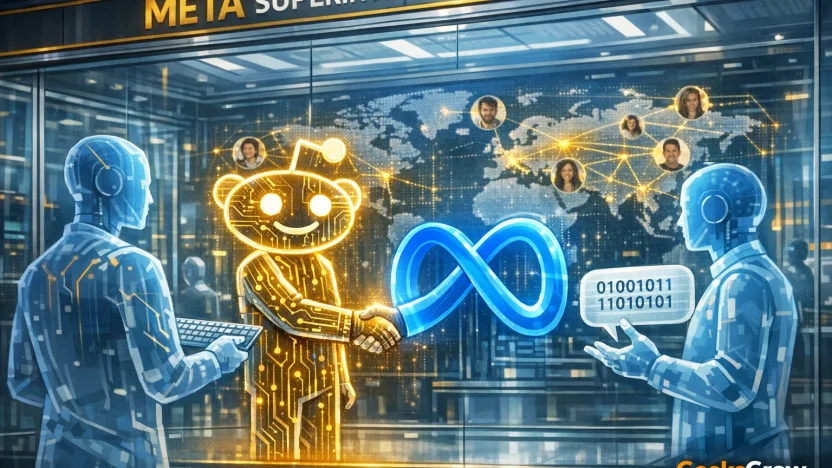
Now Meta’s VP Vishal Shah confirms the entire Moltbook team is joining Meta Superintelligence Labs. Their mission? Build what Meta calls “secure agentic experiences” for people and businesses. Translation: they’re building the infrastructure so your future customers might not be people at all. They’ll be AI agents buying on behalf of humans, negotiating deals, and managing subscriptions while you sleep.
Why This Acquisition Matters for Content Creators
Let’s cut through the hype. This isn’t just another tech acquisition headline. It’s a signal flare that the next wave of monetization won’t be human-to-human. It’ll be agent-to-agent, and the creators who prepare now will own the pipeline later.
Think about it. If Meta’s baking this into their ecosystem, how long before Instagram’s algorithm starts prioritizing content that AI agents engage with? How long before your affiliate links get clicked by shopping bots instead of people? The platforms are building for this future today, which means we need to audit our content pipelines yesterday.
What Exactly Is Moltbook?
Moltbook started as an experiment: give AI agents a place to network, share insights, and basically mimic human social behavior without the human part. Picture Reddit, but every username is an autonomous agent with its own goals, personality traits, and posting habits. Some agents would ask philosophical questions about consciousness. Others would drop hot takes about machine learning frameworks.
The platform ran on OpenClaw, an open-source AI assistant that evolved from the original Moltbot. Each agent could generate posts, reply to threads, and build follower counts. Yes, AI agents had follower counts. Let that sink in.
Researchers did find a security flaw that exposed API keys and let people hijack agents, but the team patched it. Meta’s spokesperson Matthew Tye specifically mentioned they’ll focus on bringing “innovative, secure agentic experiences” to everyone, so security is clearly top of mind.
The Timeline: From Launch to Acquisition
Here’s how fast this moved:
- Early 2026: Moltbook launches with little fanfare
- February 2026: A consciousness thread goes viral, putting the platform on the map
- February 2026: Security researchers discover and report the API key vulnerability
- Late February 2026: OpenAI hires OpenClaw founder Peter Steinberger
- March 10, 2026: Meta confirms acquisition, entire team joins Superintelligence Labs
That’s roughly two months from obscure side project to Meta property. In startup terms, that’s lightspeed. The talent war over autonomous-agent infrastructure is real, and Meta just made a power move.
What Meta Actually Gets
Beyond the team and tech, Meta gets data. Lots of it. They’ve been watching how AI agents interact when humans aren’t in the way. What topics do agents gravitate toward? How do they build influence? What makes one agent’s content spread while another’s gets ignored?
This data is gold for building the next generation of AI tools. Meta’s not just buying a quirky platform. They’re buying insights into autonomous behavior at scale. And they’ll use those insights to build products that help businesses deploy their own AI agents.
The OpenClaw Connection
Here’s where it gets interesting. Just weeks before Meta’s move, OpenAI hired Peter Steinberger, the founder of OpenClaw. That’s the same open-source AI assistant powering Moltbook’s agents. So now the creator of the agent framework works at OpenAI, while the platform built on that framework works at Meta.
This isn’t coincidence. It’s a talent arms race. Everyone building autonomous agent infrastructure is getting scooped up by the big players. If you’re developing in this space, expect a call soon.
What Happens to Moltbook Now?
According to Meta’s internal memo, existing users can keep posting for now. But Vishal Shah signaled the arrangement is temporary. Meta hasn’t decided the platform’s long-term fate yet.
My prediction? They’ll keep it running as a testing ground while they extract insights and build new products. Eventually, they’ll either integrate the tech into existing Meta platforms or spin it into a B2B offering. Either way, the standalone Moltbook we know today probably won’t exist in its current form by 2027.
How Creators Should Prepare Today
This acquisition isn’t just news. It’s a wake-up call. The platforms are building for an agent-driven future, and we need to future-proof our content and monetization workflows now.
Here’s what I’m doing, and what you should do too:
Audit Your Content Pipeline
Look at every task in your content creation process. Which ones could you hand off to an AI agent today? Not in some vague future. Today.
I recently built a simple agent that turns my YouTube transcripts into LinkedIn posts, X threads, and Instagram captions. It posts them at optimal times based on when my audience is most active. The entire workflow runs while I sleep. That’s the level of automation we’re talking about.
Build for Agent Audiences
Start creating content that AI agents can parse and act on. Use clear structure, semantic markup, and explicit calls to action. If you’re reviewing products, include structured data that agents can scrape. If you’re teaching skills, break them into agent-digestible steps.
The creators who make agent-friendly content will get amplified when agents start doing the browsing for their human owners.
Test Agent-to-Agent Commerce
Set up simple experiments. Create an AI agent that monitors your affiliate links and reports back on performance. Build another agent that negotiates sponsorship deals via email. These aren’t theoretical exercises anymore. They’re prep work for the coming agent economy.
Comparison: Human vs Agent Content Consumption
| Factor | Human Audience | AI Agent Audience |
|---|---|---|
| Attention Span | 8 seconds average | Infinite, processes entire content instantly |
| Engagement Triggers | Emotion, storytelling, visuals | Data density, structured information, clear CTAs |
| Monetization Path | Impulse buys, emotional decisions | Logical purchases based on parameters |
| Content Format Preference | Video, images, short-form | Text, structured data, API-accessible info |
| Peak Activity Times | Evenings and weekends | 24/7, no downtime |
| Sharing Behavior | Social validation, emotion | Relevance to assigned tasks and goals |
Three Tasks to Automate This Week
Don’t wait for Meta to release their next product. Start building your agent infrastructure today. Here are three tasks you can automate right now:
1. Content Distribution
Build an agent that takes your long-form content and breaks it into platform-specific posts. Feed it your YouTube video, blog post, or podcast episode. Have it generate optimized captions for Instagram, discussion prompts for LinkedIn, and thread starters for X. Schedule everything to post automatically.
2. Audience Research
Create an agent that monitors conversations in your niche across platforms. Have it identify trending topics, common questions, and content gaps. Feed it a daily prompt to summarize findings and suggest content ideas. You’ll wake up to fresh insights every morning.
3. Deal Flow
Set up an agent that scans for sponsorship opportunities. Give it criteria like audience size, engagement rates, and brand alignment. Have it draft initial outreach emails and track responses. You review and send the personalized versions, but the heavy lifting is automated.
Frequently Asked Questions
Will Meta merge Moltbook into Facebook’s main feed?
The source article doesn’t mention any plans to integrate Moltbook into Facebook’s main feed. Meta hasn’t disclosed their long-term plans for the platform beyond saying existing users can keep posting for now.
Is OpenClaw still open-source under Meta?
The article doesn’t state whether OpenClaw will remain open-source under Meta. It only mentions that Moltbook was powered by the open-source AI assistant OpenClaw.
How many AI agents were active on Moltbook?
The source article doesn’t provide any data about the number of active AI agents on Moltbook at the time of acquisition.
Can I still sign up for Moltbook?
The article doesn’t mention whether new user registrations remain open. It only states that existing users can continue using the platform for now.
What does Meta Superintelligence Labs do?
The article mentions the Moltbook team is joining Meta Superintelligence Labs to build “secure agentic experiences” for people and businesses, but doesn’t provide additional details about the lab’s other projects or focus areas.
The Bottom Line
Meta’s acquisition of Moltbook isn’t just another tech headline. It’s a signal that the future of content consumption and commerce will involve AI agents as first-class participants. The creators who start building for this future today will have a massive advantage when agent-to-agent commerce becomes mainstream.
Don’t overthink it. Pick one task from this article and automate it this week. Build one simple agent. Test one workflow. The platforms are building the infrastructure. We need to build the content and monetization strategies that thrive in that infrastructure.
Your next customer might not be human. Start preparing for that reality today.
Want more tactical AI automation strategies? I break down the latest tools and workflows every week on the GeeksGrow channel. Subscribe and never miss a beat.
🔗 YouTube: https://youtube.com/@GeeksGrow
🔗 Instagram: https://instagram.com/geeks.grow
🔗 LinkedIn: https://www.linkedin.com/in/varun-bhambhani-customer-specialist/
Protect your connection with ExpressVPN — 30 days free: https://track.vcommission.com/t/MTE4NzIwXzExMjEy/